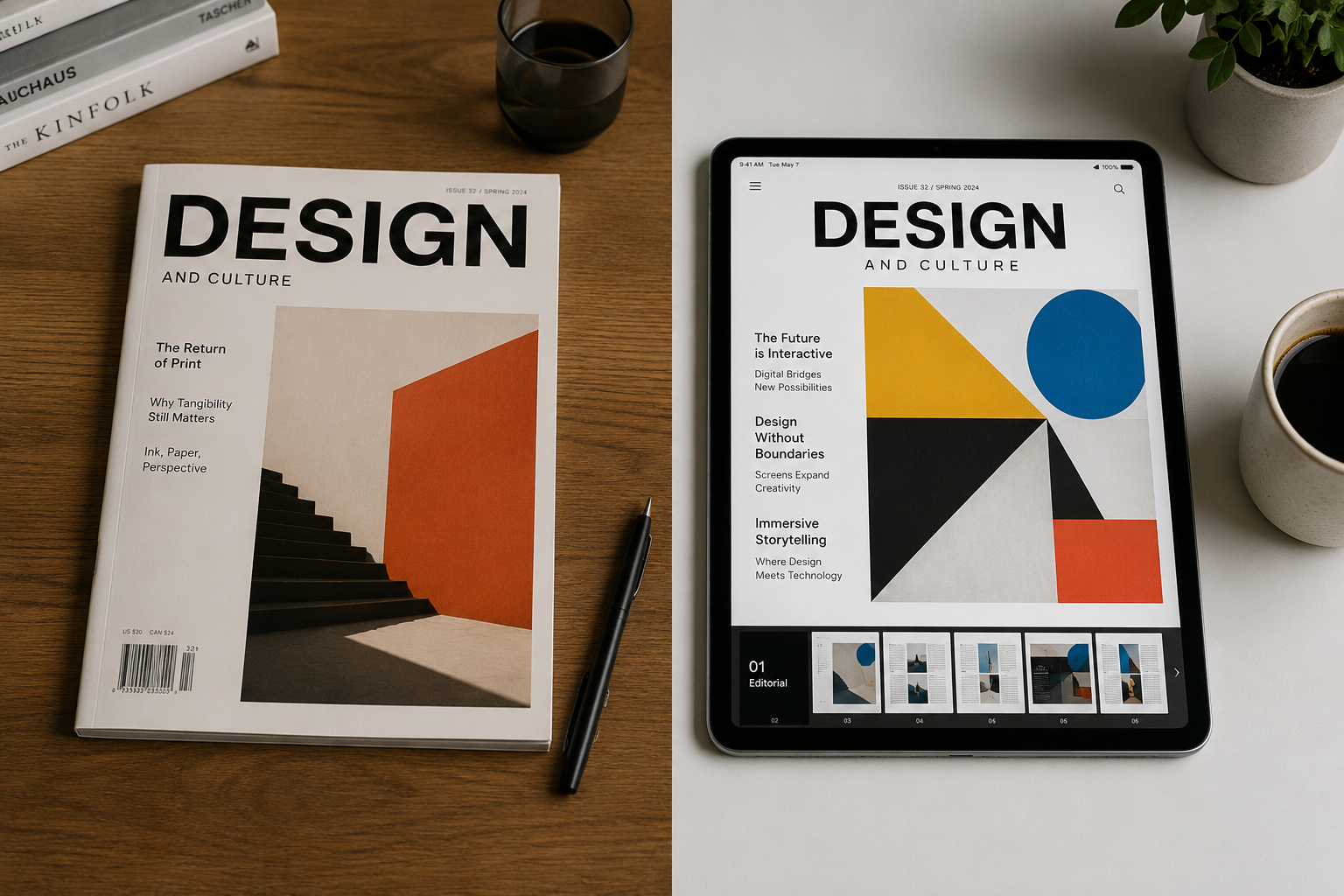
Every few years, someone publishes an obituary for print media. And every few years, print publishers respond by launching new titles, experimenting with formats, and quietly growing their subscriber bases. The death of print has been greatly exaggerated—but its relationship with digital has fundamentally changed, especially in the design and creative industries.
Why Print Persists
For design professionals, print magazines offer something digital can't easily replicate: materiality. The weight of a well-produced magazine, the quality of its paper stock, the precision of its colour reproduction—these are qualities that matter to people who spend their working lives thinking about sensory experience. A spread in Wallpaper or Eye magazine is a design object in itself, not just a delivery mechanism for content.
Print also offers focus. Reading a physical magazine removes the ambient distractions of a browser environment—no notifications, no algorithmic sidebar recommendations, no autoplay video. For long-form design writing and portfolio features, that concentrated attention is valuable. Studies consistently show higher retention rates for print versus screen reading, and creative professionals seem to intuit this even without seeing the data.
Where Digital Wins
Digital design media has advantages that print can't match. Speed is the obvious one. A digital publication can cover a product launch, a design controversy, or a portfolio reveal within hours. Print operates on monthly or quarterly cycles that feel glacial by comparison. Publications like Print Magazine have adapted by maintaining robust digital platforms alongside their physical editions, ensuring they can serve both the immediate news cycle and the slower, more reflective long-form format.
Accessibility is another strength. A digital design publication can reach readers anywhere with an internet connection, without shipping costs or distribution delays. Independent design writers and critics who couldn't afford print production can build audiences through newsletters, blogs, and social platforms. This democratisation has enriched the design conversation enormously, bringing in voices that traditional print gatekeeping would have excluded.
The Hybrid Model
The most successful design publications in 2026 operate hybrid models. They publish daily content digitally—news, opinion, project coverage—while reserving print for deeper, more curated material. The print edition becomes a quarterly event rather than a routine delivery, something readers anticipate and keep rather than skim and recycle.
This model works because print and digital serve different functions in the reader's life. Digital is for staying current. Print is for going deep. A designer might scan Dezeen on their phone during a commute, then spend Saturday afternoon with the latest issue of Kinfolk or Apartamento. The two formats complement rather than compete, and the publications that understand this distinction tend to thrive.
What Independent Creators Should Know
For designers and makers thinking about where to publish their work or how to consume inspiration, the format war is a false choice. The medium should match the message. Quick project documentation works beautifully on Instagram or a personal blog. A 5,000-word essay on material culture deserves the space and permanence of print. A portfolio needs both—a digital version for accessibility and a printed version for the tactile impact that wins clients in person.
The future of design media isn't print or digital. It's knowing when each one serves the work best, and having the craft skills to execute in both. That's a higher bar than the old world demanded, but it's also more creatively rewarding.