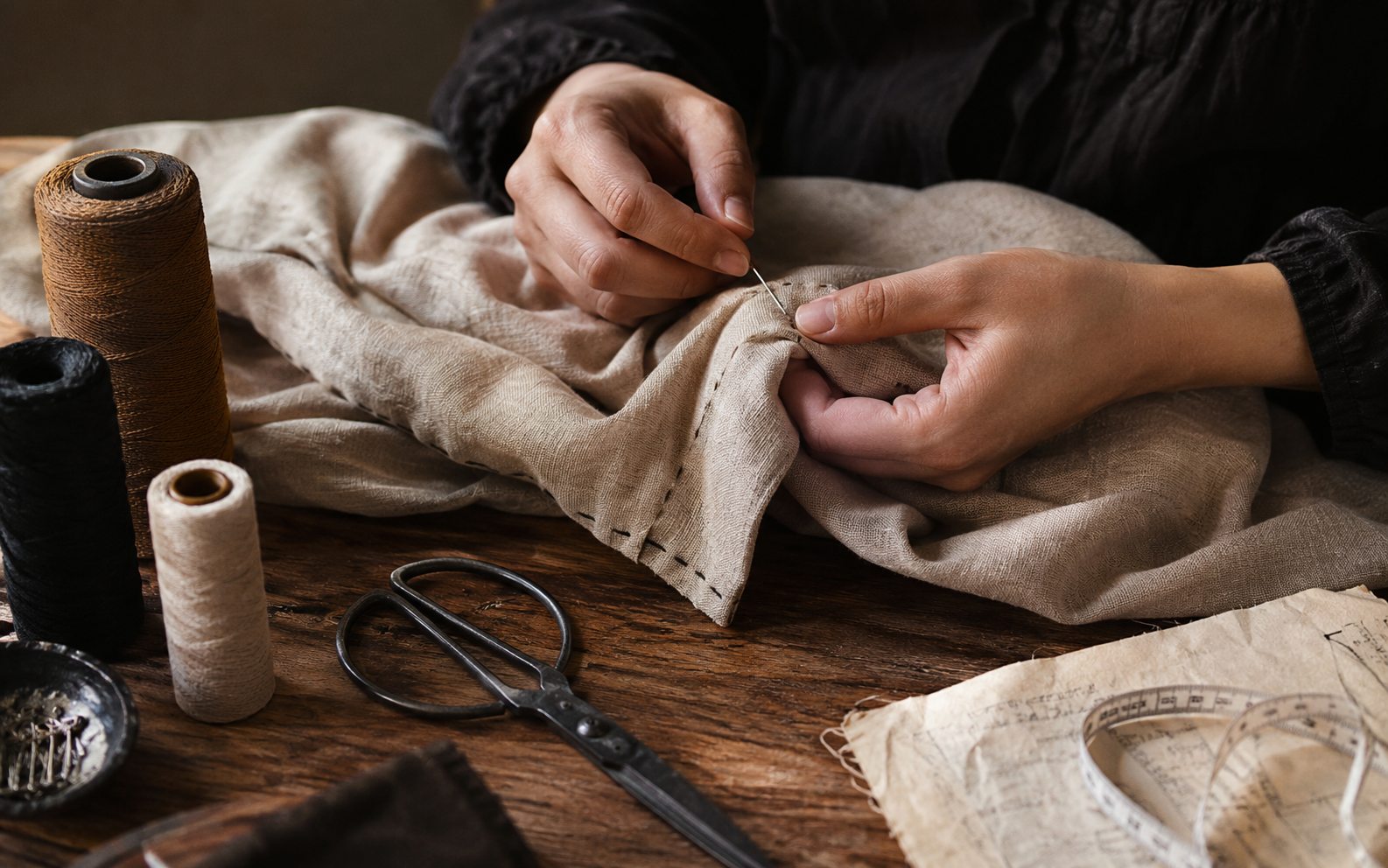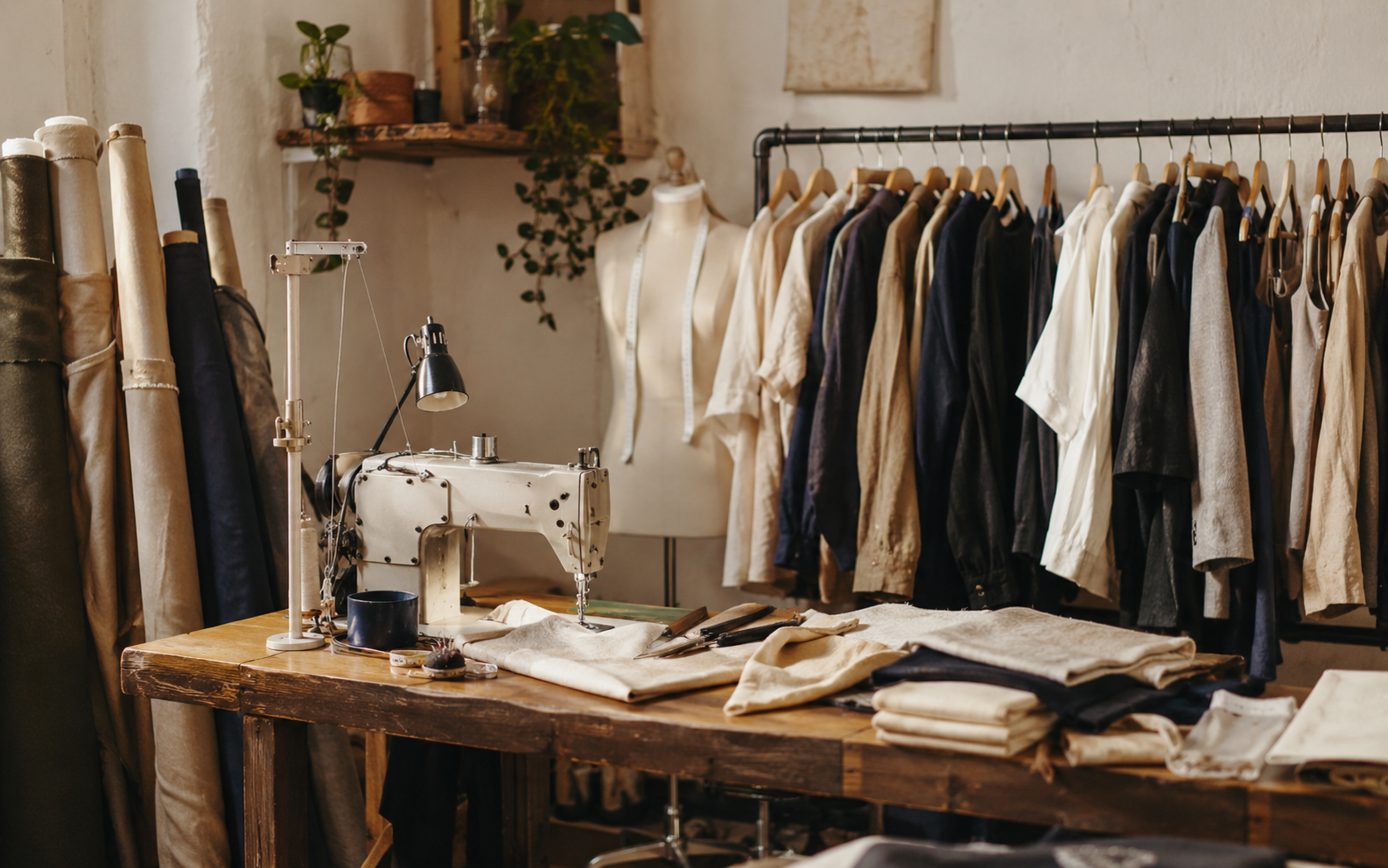
Starting a small fashion label has never been more accessible. Tools for design, production, and distribution that once required serious capital are now available to anyone with a laptop and a sewing machine. But accessibility and profitability are different things entirely, and the economics of small-batch fashion remain brutally challenging for most independent makers.
The Unit Cost Problem
The fundamental challenge in small-batch fashion is unit economics. A factory producing 10,000 units of a shirt can negotiate fabric at £3 per metre. A small studio buying 50 metres of the same fabric might pay £12 per metre. Multiply that difference across every material input—thread, buttons, zips, labels, packaging—and you start to see why small-batch garments cost what they do.
Labour compounds the gap. A factory worker sewing identical garments eight hours a day develops speed that a small-studio maker, juggling design, cutting, sewing, marketing, and shipping, simply can't match. Industry data suggests a small-batch maker spends roughly 2.5 times longer per garment than an equivalent factory worker. When you factor in minimum wage requirements, that time difference translates directly into price.
Pricing the Story
Small-batch brands that survive typically charge 4-6x their material costs, compared to the 2-3x markup common in mass production. That higher multiplier isn't greed—it's survival. It covers the longer production time, the higher material costs, the marketing labour, the website fees, the packaging, and the inevitable unsold inventory.
The challenge is convincing customers that this pricing is justified. Some brands succeed by emphasising transparency—publishing their full cost breakdowns so buyers understand exactly where their money goes. Everlane pioneered this approach, and dozens of smaller labels have adopted it since. When a customer can see that £45 of their £95 jacket went to materials and labour, the price feels less arbitrary.
Direct-to-Consumer Changes the Game
The shift to direct-to-consumer selling has been the single biggest enabler of small-batch fashion economics. Selling through a retailer typically means a 50% wholesale discount, which is devastating when your margins are already thin. Selling directly—through your own website, at markets, or via platforms like Etsy—lets you keep the full retail price.
Social media has made direct selling viable in a way it wasn't even ten years ago. A small-batch maker can build a following, showcase their process, announce drops, and handle customer service all through Instagram and email. The overhead is minimal compared to maintaining a physical retail presence. Around 72% of small fashion brands now make the majority of their revenue through direct online sales.
When Small Stays Small
Not every small-batch label wants to grow. Some makers deliberately cap their production to maintain quality and avoid the burnout that comes with scaling. They produce 20-30 pieces per design, sell them to a waiting list, and move on to the next collection. It's not a path to wealth, but it's a sustainable livelihood for makers who prioritise craft over growth.
The economics of small-batch fashion will never compete with mass production on price. That's not the point. The point is offering something that mass production can't—uniqueness, transparency, and a direct relationship between maker and wearer. For a growing number of consumers willing to pay more for those qualities, the economics work just fine.