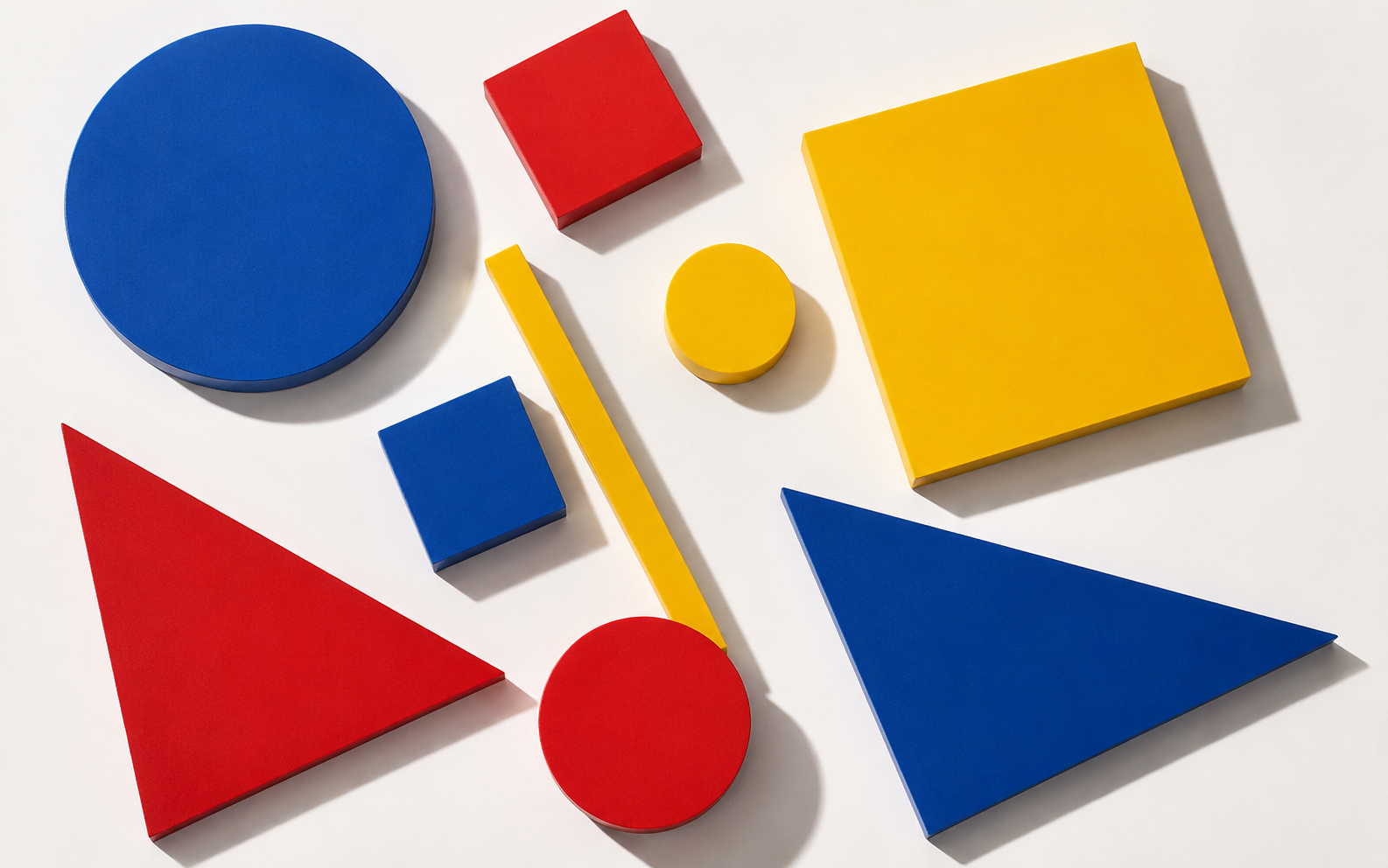
Colour is the first thing people notice and the last thing they can articulate. Walk into a room painted the wrong shade of blue and you'll feel it before you can name why. Pick a lipstick one tone too warm and something just looks off. Colour theory—the system behind why certain combinations work and others don't—isn't just for painters and graphic designers. It's embedded in every visual decision we make, whether we realise it or not.
The Basics Still Matter
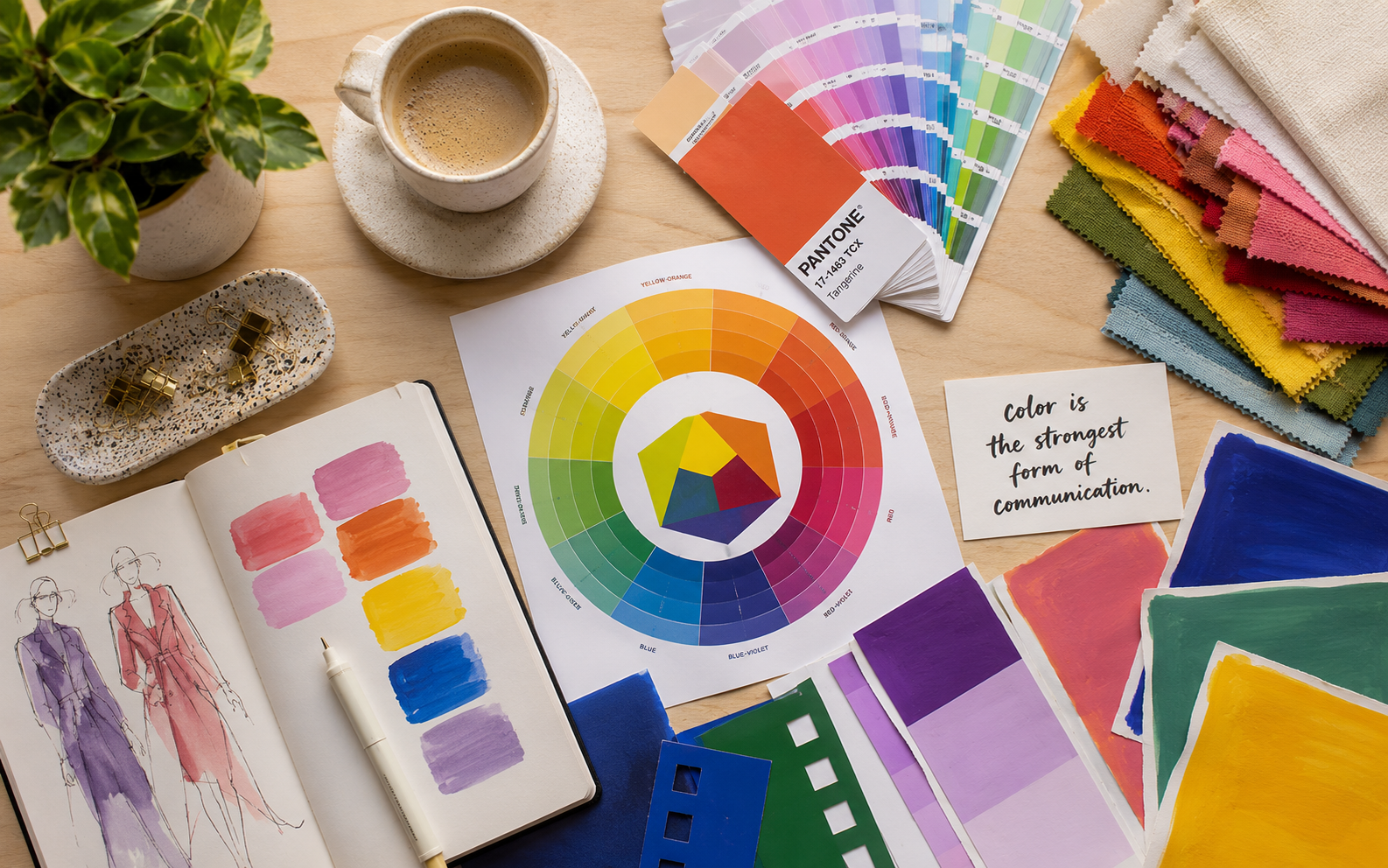
At its core, colour theory is about relationships. Complementary colours (opposites on the wheel) create energy and contrast. Analogous colours (neighbours on the wheel) create harmony and calm. Triadic schemes (evenly spaced) feel balanced but dynamic. These relationships, first mapped systematically in the 18th century, remain the foundation of every colour decision made in professional design today.
The Design Museum in London runs regular exhibitions exploring how designers use these principles across disciplines, from product design to fashion to architecture. What's striking about their permanent collection is how consistently the strongest pieces rely on colour relationships that follow these basic rules—even when the designers claim to work intuitively.
Colour in Fashion
Fashion designers use colour theory constantly, though they rarely frame it in academic terms. A stylist who tells you to pair a navy blazer with an ochre scarf is applying complementary colour theory. A brand that releases its entire collection in shades of sage, olive, and forest green is working with analogous harmony. The Pantone Colour of the Year announcement, which drives billions in product decisions, is really just a massive exercise in colour trend forecasting.
Understanding even basic colour relationships can transform how you dress. Most people default to neutrals because they're safe. But adding a single complementary accent—a coral bag against a teal dress, amber earrings with a grey suit—creates visual interest that neutrals alone can't achieve.
Digital Colour Challenges
Working with colour on screen introduces complications that Johannes Itten never had to worry about. Colours render differently across devices, browsers, and screen technologies. A red that looks vibrant on a calibrated design monitor might appear muddy on a budget laptop. Designers working in digital spaces have to account for this variability, often choosing colours that remain legible across a wider range of conditions rather than colours that look perfect in a single context.
Accessibility adds another layer. Approximately 8% of men and 0.5% of women have some form of colour vision deficiency. Designing colour systems that work for everyone means relying on value contrast (light vs dark) as much as hue contrast (red vs green). The best digital designers build their palettes to function in greyscale first, then add colour as enhancement rather than the sole carrier of information.
Making It Practical
You don't need a design degree to use colour more intentionally. Start with a three-colour rule: choose a dominant neutral, a secondary tone, and one accent. Apply this to your wardrobe, your living space, or your brand materials. The constraint forces decisions that create coherence, which is ultimately what good colour use is about—not individual colours, but how they relate to each other in a system.
Colour theory won't make you a designer overnight. But it will sharpen your eye, give you vocabulary for what you're already sensing intuitively, and help you understand why some environments feel inviting while others feel chaotic. That's a practical skill for anyone who cares about how things look—which, increasingly, is everyone.